Southern Shaolin Kung Fu
ShaolinQuan少林拳
Southern Shaolin Kung Fu - ShaolinQuan 少林拳
We have to start this page with a few comments about terminology. I use the phrase “Kung Fu” in the heading simply because it is the most well known term for a certain category or fighting styles that are often described as “vigorous” or “external” in nature. The phrase Kung Fu was introduced to the west in the early 1970’s and was based upon a misunderstanding. The phrase literally translates as; “energy-effort / time”, in essence the phrase implies that which is obtained by the expenditure of effort and energy over time in other words- skill! Its original meaning was not specific to martial arts, but that has become its everyday meaning, so wright or wrong I use the phrase just for simplicity’s sake.
As a teenager and young man I trained in just Kung Fu for over a decade and continued to train in it for a further five years or so alongside TaiJi, when I started to study XingYi I had to reduce my Kung Fu training simply because of the time constraints and to some degree because of the conflicting methodologies. Forty years later I understand more that they are not really in conflict, but learning two or three things simultaneously when some of those things are new to you is very difficult.
I train in and teach some core aspects of Kung Fu, I find for my personal training I enjoy the physical aspects and the essential skills that are easily found in the training. I teach it for a variety of reasons, one reason is that if someone wants to obtain some self defence skills quickly it is the best approach. A second reason is that if someone wants to study XingYi or TaiJi but has little or no previous martial arts experience, Kung Fu offers a a good route to obtaining balance, strength and most importantly an understanding of body mechanics that can be hard to initially grasp in training TaiJi and XingYi.
I focus on styles of Kung Fu that are classified as Southern (Nam Pai) Shaolin, Hakka (KeJia) with a particular focus on Phoenix Eye Fist (FengYanQuan). The Phoenix Eye fist skill is also important to XingYi, so getting a foundation early in this difficult skill is useful.
The training is built around physical conditioning, flexibility obtained through Dao Yin training and the study of a hand form called San Zhen, it’s also known as Sam Chien and in some Karate schools as Sanchin. Although San Zhen forms vary across schools they all have the same core elements of establishing strong stable stances, focused deep respiration and strong focused strikes with a mixture of isometric and isotonic tension in some phases.
Once a student has obtained the balance, strength and coordination they are ready to transition to XingYi. As the early training in XingYi is also vigorous and relatively “external” in nature both methods can be trained in parallel without confusion.
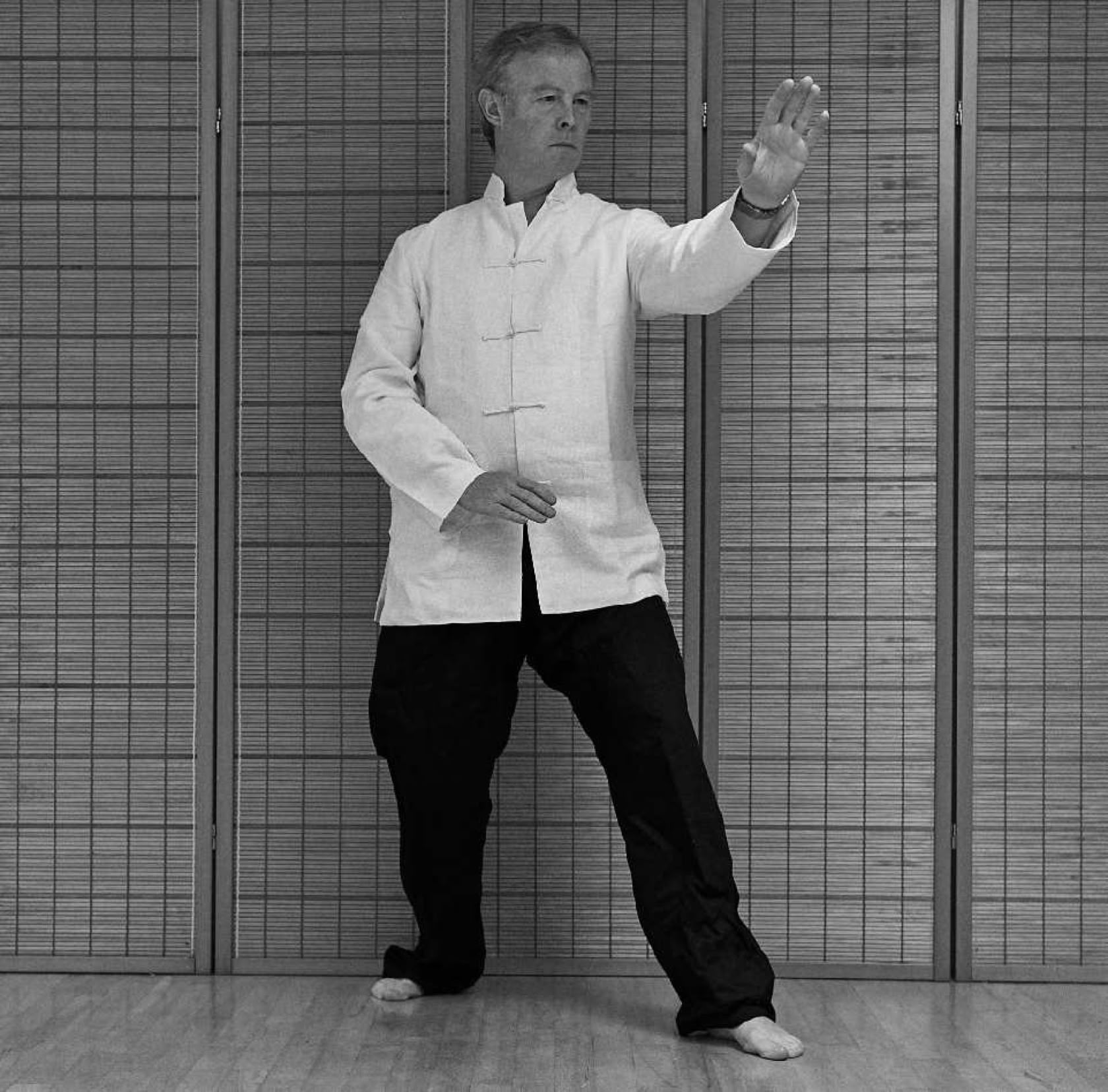
PiQuan - Splitting
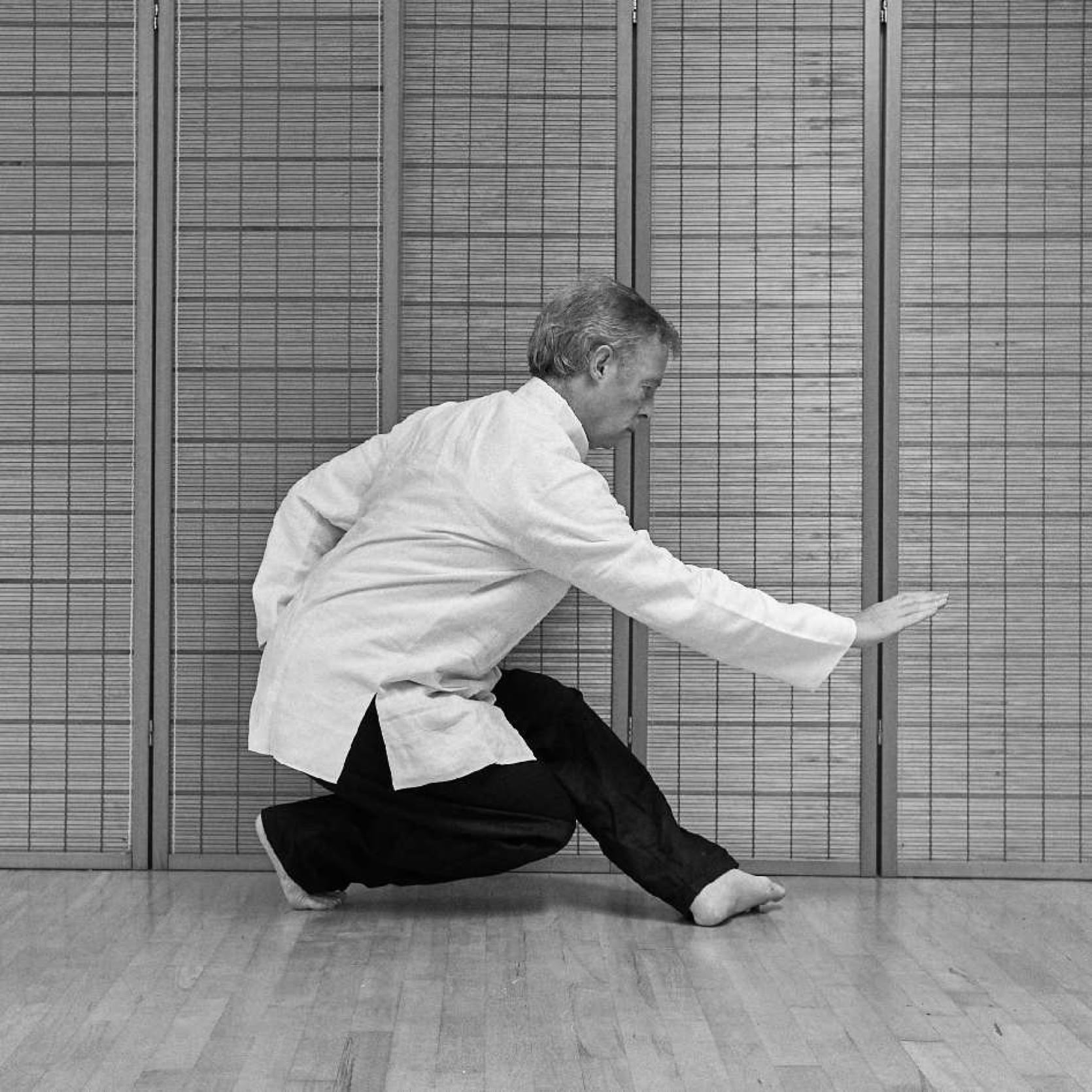
Long - Dragon
YuanYi QuanFa 原意拳法
Bringing Reality To TaiJi and XingYi
